How Do I Avoid A Root Canal?
How Do I Avoid A Root Canal?
Most people hear ‘root canal’ and think the problem starts there. It usually doesn’t. By the time a tooth needs that kind of treatment, it has often been asking for help for a while in much quieter ways.
The good part is many root canals can be prevented. And it usually comes down to catching the early signs and being consistent with the simple habits that protect your teeth every day. Let’s get into what actually helps.
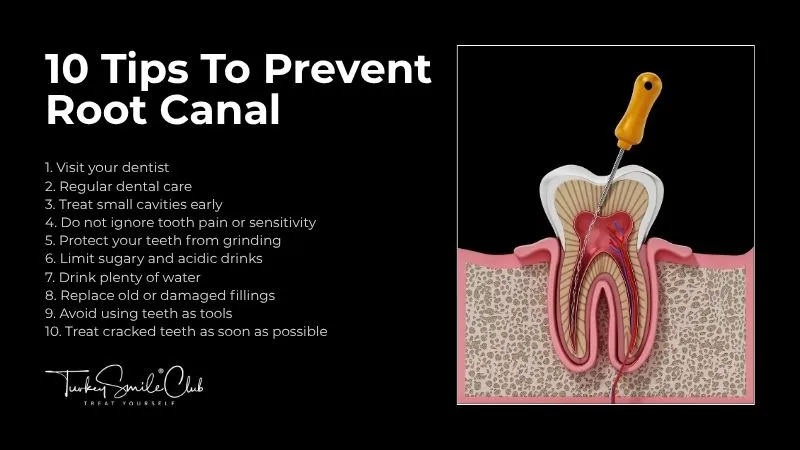
10 Tips to prevent root canal treatment
A root canal usually does not come out of nowhere. Most of the time, the tooth has been giving little warnings for a while. A cavity gets deeper. A crack gets ignored. A filling gets old and starts leaking. Then bacteria move closer to the nerve, and that is when the real trouble starts. So, if you want to prevent a root canal, the whole idea is to catch problems while they are still small and easy to handle.
1. Visit your dentist
A lot of people wait until a tooth hurts, and honestly, that is where things usually get harder. Pain often means the problem is no longer minor. It does not always mean you need a root canal, but it means the tooth has already been under stress for some time.
Routine checkups help because dentists are not just looking for obvious decay. They also notice weak fillings, early cracks, bite pressure, gum recession, and those subtle changes most people would never spot in the mirror. That early window matters. Once the pulp inside the tooth gets involved, treatment becomes more complex.
2. Regular dental care
It is really important. Regular dental care is what keeps a small problem from turning into a root canal situation. Teeth usually do not get infected all at once. It starts quietly. Plaque builds up, acids weaken the enamel, a tiny cavity forms, and if that keeps getting ignored, the problem moves deeper toward the nerve.
So, the goal is simple: do not let things sit for too long. Brush twice a day with fluoride toothpaste, clean between the teeth every day, and do not skip checkups just because nothing hurts. That last part matters a lot, because early decay, worn fillings, gum recession, and tiny cracks often start with no pain at all. We usually catch those during routine visits, when they are still easy to treat.
And brushing hard is not the answer either. Brush gently but thoroughly. Reach the gumline. Take your time. If food and plaque keep sitting between the teeth, floss or interdental brushes become just as important as brushing itself.
3. Treat small cavities early
Small cavities are where people lose time for no reason. They hear “small” and think it means safe to ignore. It does not.
A small cavity is usually one of the easiest things to treat in dentistry. But if you give it enough time, it does what decay always does. It keeps progressing. Then a filling may no longer be enough. Then the nerve starts reacting. Then suddenly the treatment plan sounds very different. A review of modern caries management supports this same point: managing decay early lowers the chance of deeper damage later.
4. Do not ignore tooth pain or sensitivity
A tooth that suddenly reacts to cold, sweets, pressure, or even air is not being dramatic.
Now, not every sensitive tooth needs a root canal. That would be too simple. Sometimes it is gum recession. Sometimes enamel wear. Sometimes a tiny crack. But when pain lingers, gets sharper, shows up at night, or starts happening for no clear reason, that is not something to casually wait out.
The earlier the cause is identified, the better the odds that the tooth can be treated in a much simpler way.
5. Protect your teeth from grinding
Grinding is one of those habits people often have without realizing it. They wake up with jaw tightness, a headache, or teeth that feel oddly sore, but they do not connect it to clenching at night.
The problem is that repeated pressure weakens teeth over time. It can wear enamel down, stress old fillings, and create tiny cracks that later turn into much bigger problems. Once a crack gets close to the pulp, root canal treatment may become necessary.
There is clinical research linking excessive bite force and structural stress to cracked tooth problems, which is why night guards and bite assessments can make a real difference for some patients.
6. Limit sugary and acidic drinks
A lot of people think sugar is the only issue. It is not. Acid matters too. The combination of the two is what makes certain drinks so damaging to teeth.
Soft drinks, energy drinks, sweet coffees, packaged juices, and sports drinks can keep the mouth in a low pH state repeatedly during the day. If you sip them slowly for hours, your teeth stay under acid attack longer than they should.
Research supports this. Frequent sugar exposure is strongly linked to dental caries, which is still one of the main reasons teeth end up needing deeper treatment.
7. Drink plenty of water
Water is underrated in dental care. It helps rinse the mouth, dilute acids, and support saliva, and saliva is a huge deal whether people realize it or not. It is one of the mouth’s built-in defense systems.
If someone has the habit of sipping coffee with syrup, soda, or juice all day, replacing part of that with water can already improve the oral environment. It is not flashy advice, but it works.
In fluoridated areas, drinking water also supports cavity prevention. A large Cochrane review found a protective benefit from water fluoridation in reducing tooth decay.
8. Replace old or damaged fillings
A filling is not permanent just because it has been in place for years. Materials wear down. Margins can open up. Microleakage can occur. Food traps can form. Bacteria thrive in these conditions.
That is why an old filling that ‘doesn’t hurt’ can still be a problem. Decay sometimes starts underneath or around it quietly. By the time the tooth becomes painful, the damage may already be much deeper than expected.
If a filling feels rough, catches floss, looks cracked, or the tooth starts feeling different when biting, it is worth getting it checked before it turns into something bigger.
9. Avoid using teeth as tools
People do this more than they realize. Opening packages. Tearing plastic. Biting thread. Cracking seeds or nuts. Holding things with the teeth when both hands are busy. It feels harmless until it is not.
Teeth are strong, but they are not designed for random force in random directions. That kind of stress can chip enamel or initiate small fractures you may not notice right away. Later, the tooth may begin to hurt during chewing, and the crack may have already extended deeper.
10. Treat cracked teeth as soon as possible
Cracked teeth are tricky because they do not always cause dramatic symptoms at first. Sometimes the only sign is a sharp sensation when chewing, or sudden cold sensitivity that comes and goes. Patients often describe it as “something feels off” more than actual pain. That is exactly why treatment gets delayed.
A crack can allow bacteria and stress to travel deeper into the tooth. If the crack reaches the pulp, the tooth may require root canal treatment. If it extends further, the tooth may no longer be restorable. Early treatment truly matters here.
A recent clinical review on cracked teeth also points out that diagnosis is often delayed because symptoms can be subtle while the damage continues to progress.
How to avoid a root canal naturally
If a tooth is already infected deep inside, it cannot be treated naturally at home. Salt water can soothe. Clove oil may temporarily reduce discomfort. Painkillers can provide short-term relief. But none of these eliminate bacteria from the pulp. Once that tissue is infected or irreversibly inflamed, home care is not a definitive solution. However, preventing the need for root canal treatment naturally is possible.
This is where the basics matter most. Brush properly. Clean between the teeth. Use fluoride toothpaste. Drink more water. Reduce sugary and acidic drinks. Do not ignore symptoms. Treat small issues before they reach the pulp.
The natural way to avoid root canal treatment is not a miracle remedy. It is identifying and managing problems before they progress to that stage. That is what usually makes the biggest difference.