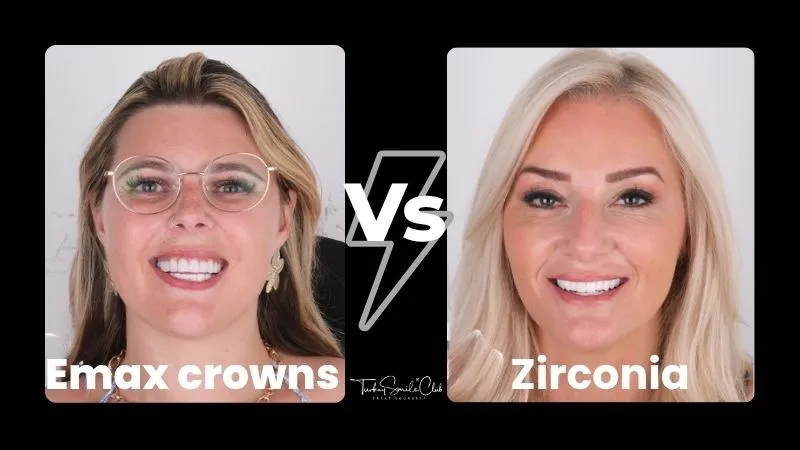
Emax crowns vs. zirconia: Which one to choose?
In dentistry, the two most prominent metal-free alternatives to traditional metal-supported restorations are Antalya Emax and zirconia crowns. While both materials are capable of mimicking the appearance of natural teeth, they differ in terms of their mechanical properties and aesthetic outcomes. The choice of crown depends on factors such as the tooth’s position in the mouth, chewing forces, and the patient’s aesthetic expectations.
Emax crowns are designed for front teeth and deliver highly realistic results, whilst zirconia crowns stand out for their durability. Which is more important to you? Read on to find out.
What are Emax crowns?
Emax crowns are made from a glass-ceramic known as lithium disilicate, in which crystals are interwoven. This results in a crown that is more durable yet stronger than porcelain crowns. Antalya Emax crowns cover all surfaces of the tooth and improve both its appearance and function.
Emax’s most distinctive feature is its high translucency, which allows it to transmit light in the same way as natural tooth enamel. This makes it the gold standard, particularly for restorations in the smile zone (front teeth).
What are Zirconia crowns?
Zirconia crowns are made from zirconium dioxide, a highly durable ceramic material. In dentistry, this material is typically used in a form stabilised with yttria (yttrium oxide). Zirconia is also known as ‘ceramic steel’ because it possesses a mechanism whereby it undergoes a phase change under stress, thereby halting the progression of cracks.
Zirconium’s flexural strength is much higher than that of Emax. This strength makes it the safest choice for posterior teeth (molars), where chewing forces are greatest, and for long bridges.
A zirconium crown in Antalya is highly biocompatible with body tissues; it does not cause gum recession or metal allergies, and bacterial build-up on its surface is lower than with other materials.
Types of Zirconia crown
- Monolithic (Single-Piece) Zirconium: The crown is produced from a single block of zirconium. This is the option with the lowest risk of fracture and porcelain chipping.
- Layered Zirconia: Zirconia is used as a substructure (framework), and porcelain is applied over it to achieve an aesthetic appearance. This method is more aesthetically pleasing, but the risk of chipping in the overlying porcelain is higher.
Differences between Emax and Zirconia crowns?
When selecting materials, dentists usually focus on the question ‘Aesthetics or strength?’. Whilst Emax stands out for its elegance, zirconium is known for its durability.
1. Aesthetic appearance
The main difference between Emax and zirconium is their light transmission.
- Emax crown: Thanks to its lithium disilicate glass-ceramic structure, it offers the light transmission (translucency) closest to that of natural tooth enamel. This characteristic makes it difficult to distinguish the restoration from a natural tooth.
- Zirconia crown: Traditionally, it has a more opaque and whitish structure. However, ‘high-translucency’ types of zirconia are now available to meet contemporary aesthetic expectations.
2. Favoured cases
- Emax crown: It is the first choice for anterior restorations where aesthetics are critical, as well as for porcelain veneers and single crowns.
- Zirconia crown: It is ideal for molars, where chewing forces are very high, as well as for multi-unit long bridges and implant-supported restorations. It is also more effective than Emax at masking dark-coloured or stained teeth beneath the restoration.
3. Prices
The cost of both materials is moderate to high, depending on the technology and laboratory process used. Generally speaking, the prices of zirconium and Emax are similar, although laboratory costs may vary depending on the specifics of the procedure
4. Lifetime
Provided that good oral hygiene is maintained, both materials will last for many years:
- Emax crown: Its average lifespan is between 10 and 15 years.
- Zirconia crown: Thanks to its exceptional resistance to wear and tear, it can last for 10–20 years or more.
5. Strength
When it comes to durability, zirconium is by far the leader:
- Emax crown: Its strength is approximately 360 MPa to 500 MPa. Whilst this is more than sufficient for the anterior region, there is a higher risk of fracture under extreme forces in the posterior region
- Zirconia crown: Its flexural strength ranges from 900 MPa to 1200 MPa (and sometimes even higher). This immense strength withstands heavy chewing loads.
6. Weaknesses
Emax crown: There is a risk of fracture when used on posterior teeth or in long bridges. It may crack if the material is not prepared to a sufficient thickness.
Zirconia crown: Although the opacity of a traditional zirconium crown provides a natural appearance, it may not look entirely realistic.
Which should you choose?
The basic rule when making a choice is as follows: choose Emax if maximum aesthetics are required and zirconia if maximum strength is required.
- Front teeth: For single-tooth restorations, Emax is generally the first choice for a natural appearance. However, if a bridge is to be fitted in the front region, the durability of zirconia may be required.
- Posterior teeth: Monolithic zirconia is more suitable for withstanding the high forces exerted on molars. Emax can also be used on posterior teeth, but this requires the tooth to be sufficiently prepared (at least 1.5–2 mm) to allow for a thicker porcelain layer.
- Tooth preparation: As zirconia is very strong, it allows for less tooth reduction (approximately 1 mm), which helps to preserve natural tooth structure. Emax, on the other hand, requires a thicker structure for strength and therefore necessitates greater tooth reduction.
FAQ
When is Emax the better choice?
Emax crowns are the best choice when maximum aesthetics and a natural appearance are required for front teeth. Furthermore, it delivers excellent results in procedures carried out on enamel (such as veneers).
Can you mix Emax and zirconia?
Yes. In dentistry, a technique known as ‘CAD-on’ allows the strength of zirconia to be combined with the aesthetics of Emax. In this system, a zirconia substructure (framework) is prepared, onto which a layer of lithium disilicate is laminated to achieve an aesthetic appearance. This hybrid structure is both durable and highly aesthetic.
If you are planning to have Emax or zirconia crowns fitted in Antalya, you can contact us via WhatsApp or right here. You can find out which treatment is more suitable for you and get pricing information.
This blog post is for informational purposes only; the most suitable Antalya dental crown treatment for you can only be determined through a consultation with your dentist.