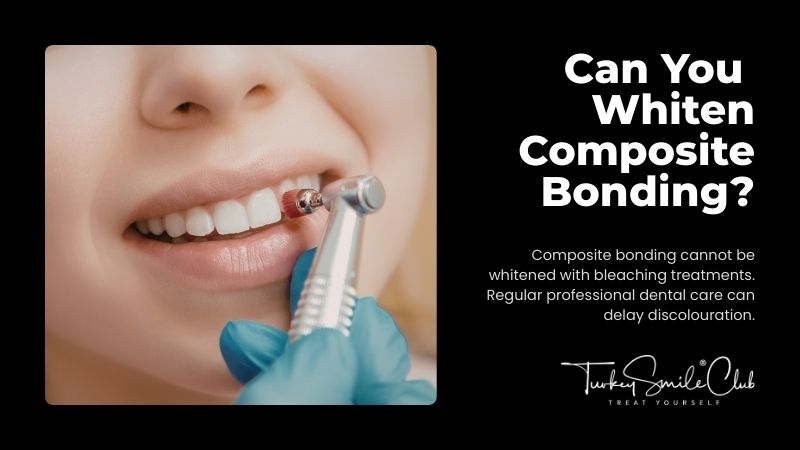
Can You Whiten Composite Bonding?
Can You Whiten Composite Bonding?
Due to its chemical structure, composite bonding absorbs colour pigments like a sponge. This colour change begins to become noticeable after approximately 5 years. At this stage, the first thing that comes to mind is whitening the bonding. However, it should be noted that composite bonding cannot be whitened like natural teeth.
Teeth bleaching products are designed to bleach the colour of natural tooth enamel. Composite resin, by its very nature, does not react with whitening gels or bleaching agents.
When patients have their teeth whitened while they have bonding, they see that their teeth have whitened but the composite bonding has remained the same colour. As a result, the bonding now appears darker and more yellow due to the contrast.
Why has my composite bonding turned yellow?
Composite bonding is produced from a mixture of plastic resin and fine glass particles. When first placed, the material is polished to achieve a smooth, natural-looking surface that blends in with the surrounding teeth. However, over time, composite bonding wears down.
Despite good oral hygiene, the surface of composite bonding becomes very slightly rough over the years. Microscopic pores form, allowing pigments from food and drink to adhere more easily.
Additionally, colouring agents can cause composite bonding to yellow. Beverages such as coffee, tea, red wine and cola contain strong colour pigments. Over time, these pigments adhere to the surface of the composite material. Smoking also accelerates colour change because tobacco contains tar and other stain-forming compounds.
In some cases, discolouration is not solely due to surface stains. Composite resin also undergoes a natural ageing process. As the material ages, it absorbs pigments and gradually loses its shine. This process is usually slow, so many patients only notice the change after several years.
Can composite bonding stain?
Yes, composite bonding stains over time. Although the material is designed to be resistant to discolouration, it has a more porous structure than ceramic restorations such as porcelain veneers.
Frequent consumption of coffee, tea, red wine, curry and dark-coloured sauces causes pigment build-up on the bonding surface. Poor oral hygiene exacerbates the problem. When plaque builds up on the tooth, it forms a sticky surface that attracts pigments. Even in people with good oral hygiene, some discolouration may occur over the years as the surface polish naturally wears away. You can protect your composite bonding from discolouration by having it polished by your dentist once a year.How Can you make composite bonding look whiter?
There are several ways to refresh yellowed and stained composite bonding. You can make a choice by evaluating your needs and expectations.
Professional polishing by a dentist
The most practical approach is professional polishing. During this procedure, the dentist uses polishing discs and pastes specially designed for composite materials. These tools remove surface stains and restore the bonding’s outer layer to a smooth finish. If there are broken or cracked bondings, they are repaired.
Replacing old composite bonding
If the bonding has discoloured significantly or worn down, the best solution is to replace it. Your dentist will carefully remove the old composite and place new material that matches the colour of the surrounding teeth. Modern composite materials offer a wide range of tooth shades and translucency options. This allows the dentist to create a look that blends naturally with the patient’s smile.
If you have had composite bonding for more than 5 years, the best option is to replace it. This can be done with a new composite application or porcelain veneers.
Whitening natural teeth before new bonding is placed
When patients wish to have composite bonding in Antalya, it is recommended that their teeth be whitened first. Once whitening is complete and the new tooth colour has stabilised, the colour for composite bonding is selected. The bonding process then proceeds. This approach helps prevent composite bonding in Antalya from appearing darker than the surrounding teeth.
Planning the sequence of treatments correctly is important. Whitening after bonding has been performed can cause a colour mismatch and may sometimes require the bonding to be redone.
Conclusion
Composite bonding is an effective and protective method for improving the shape, colour and symmetry of teeth. However, unlike natural enamel, this material does not respond to whitening treatments.
If bonding becomes stained or slightly discoloured over time, the most appropriate solution depends on the condition of the restoration. Professional polishing can remove most surface stains. If the material is significantly worn or discoloured, it can be replaced with a new layer.
Brushing twice a day and using dental floss or interdental brushes prevents plaque build-up and reduces discolouration. Rinsing your mouth with water after drinking coffee, tea or red wine is a tip that will help delay discolouration. These small habits significantly extend the aesthetic life of composite bonding.
FAQ
Can you whiten composite bonding at home?
Home whitening products do not change the colour of composite bonding. Whitening gels are designed to penetrate the natural tooth enamel and break down internal stains. As composite resin does not have the same structure, these agents cannot change the colour of the material.
If whitening is applied at home while bonding is present, natural teeth may lighten, but the bonding will remain the same colour. This can sometimes make the colour difference more noticeable. Additionally, it is important to remember that home teeth-whitening procedures can damage tooth enamel, accelerating colour changes.
Does hydrogen peroxide whiten composite bonding?
Hydrogen peroxide is the main active ingredient in many professional and home whitening systems. Although effective on natural teeth, it does not chemically alter the colour of composite resin. Peroxide molecules cannot penetrate the composite material. Therefore, the bonding remains the same colour after the whitening procedure.
How to whiten composite bonding at home with baking soda
Baking soda is sometimes recommended as a natural whitening method, but it does not bleach the colour of composite bonding. Baking soda works by lightly abrading the tooth surface to remove surface stains. If you use baking soda on bonding and the surface of the material becomes rough, it may become more prone to staining over time.
How long does composite bonding whitening last?
Composite bonding cannot be whitened. However, when the dentist polishes surface stains, the brighter appearance can be maintained for months, depending on use. Avoiding dark-coloured foods and drinks, maintaining good oral hygiene, and having regular dental check-ups will help preserve this appearance for longer.